
Written & Reviewed by Dr. Anuran Ghosh Mondal, BDS
Last Updated: October 14, 2026
A successful dental clinic in India needs more than good clinical skills. In today’s competitive healthcare landscape, sustainable growth requires a structured dental clinic marketing plan & Strategy that attracts high-value patients, converts local inquiries into confirmed appointments, builds clinical trust, and brings existing patients back for long-term preventive care.
This step-by-step dental marketing blueprint covers positioning, website optimization, local SEO, Google Maps, paid advertising, patient retention, referrals, and the key metrics every dental practice owner should track.
Dental Clinic Marketing Strategy vs. Marketing Plan: What’s the Difference?
Dental Clinic Marketing Strategy: The high-level foundation—defining your unique value proposition, target patient demographics, procedure pricing, and high-margin service focus (implants, aligners, full-mouth rehab).
Dental Clinic Marketing Plan: The tactical, month-by-month execution roadmap—running Google Business Profile reviews, local SEO campaigns, WhatsApp recall workflows, and educational video marketing.
Ethical Advertising Under DCI Guidelines: What Indian Dentists Can and Cannot Do
Marketing a dental clinic in India requires strict adherence to the code of ethics established under the Dentists Act and the Dental Council of India (DCI). Promoting your clinic should focus on transparency and patient awareness, not commercial touting.
✅ What Indian Dentists CAN Do:
- Share Factual Information: Display verifiable details including clinic location, consultation hours, contact numbers, and recognized degrees/specialties.
- Educate Patients: Publish informative articles and educational videos explaining dental conditions, treatment procedures, and preventive oral hygiene.
- Maintain Online Listings: Optimize your Google Business Profile, website, and digital maps so patients in your local area can discover your clinic.
- Display Authentic Reviews: Allow patients to leave voluntary, genuine feedback and star ratings on third-party platforms.
❌ What Indian Dentists CANNOT Do:
- Claim Superlatives or Guarantees: Never advertise claims such as “Best Dentist in [City],” “100% Painless Cures,” or guaranteed treatment outcomes.
- Run Misleading Price Gimmicks: Avoid flashing commercial discounts, cut-rate treatment promotions, or deceptive “free camp” sales hooks.
- Self-Aggrandizement & Touting: Do not disparage fellow colleagues, pay third-party touts for patient referrals, or use exaggerated before-and-after imagery to solicit patients.
Official reference: Check the regulatory framework and code of ethics on the Official Dental Council of India Portal.
What Is a Dental Practice Marketing Plan & Strategy (And Why Most Clinics Fail)?
A dental clinic marketing plan is a structured strategy for attracting, converting, and retaining patients through online and offline marketing channels. Clinics that rely only on word-of-mouth often experience unpredictable patient flow and revenue swings. A planned marketing system creates more consistent visibility, leads, appointments, and long-term patient relationships.
The goal is not simply to “get more patients.” The goal is to attract the right patients for the treatments your practice wants to grow, convert them efficiently, and retain them over time.
Step 1: Establish Your Core Positioning & Patient Personas
Before spending on Google Ads, Meta Ads, SEO, or social media, define exactly who you want to attract and why they should choose your clinic.
Your positioning must answer three questions:
- Target Audience: Who is your ideal patient?
- Core Focus: Which treatments do you want to scale?
- Value Proposition: Why should patients choose you over a competitor?
Practitioner Insight:
The most frequent mistake clinic owners make is marketing every procedure simultaneously. Marketing delivers higher ROI when you focus on a few priority services and promote them consistently before scaling your ad spend.
Prioritizing High-Yield Dental Services
Allocate your budget toward treatments that combine clinical proficiency, high demand, and strong margins:
- High-Ticket Procedures: Dental implants, full-mouth rehabilitation, clear aligners, and cosmetic dentistry.
- Volume & Retention Drivers: Root canal treatments, crowns & bridges, pediatric dentistry, and emergency dental care.
Your marketing strategy should prioritize treatments that are clinically appropriate for your practice and commercially sustainable, you can offer a patients for No cost EMI facility for Dental treatment.
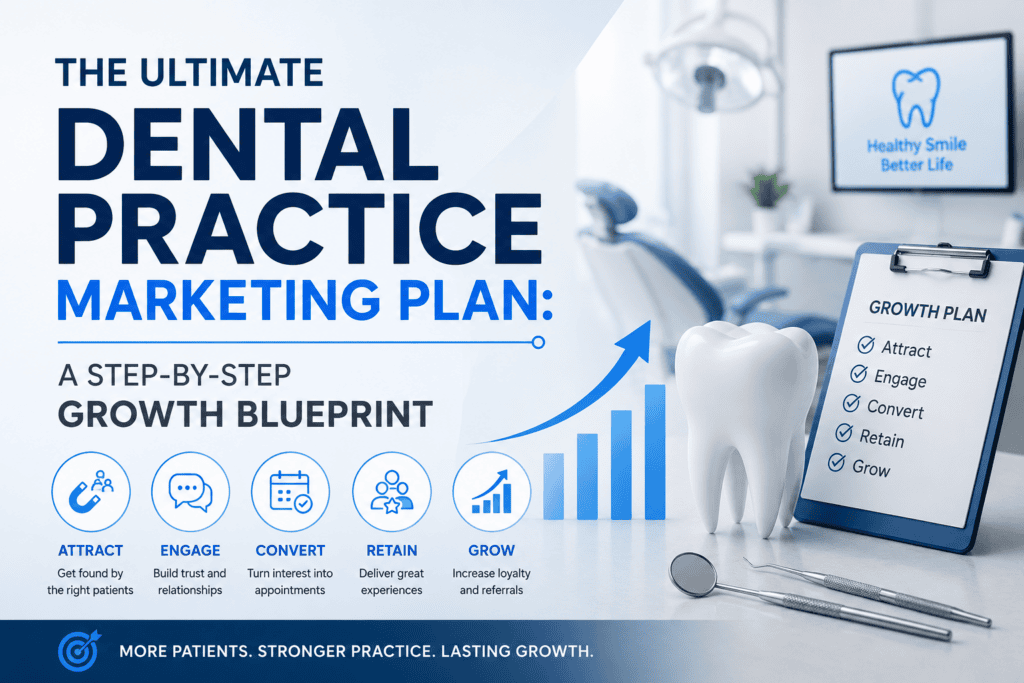
High-Impact Treatment Focus
- Implants & Full-Mouth Rehab: Educate on candidacy, treatment stages, recovery timelines, and ethically documented outcomes.
- Aligners & Cosmetic Care: Highlight suitability criteria, retention protocols, and realistic results without guaranteeing outcomes.
Local Competitor Benchmarking
Search your core procedures with your location (e.g., Dental implants in [City], Dentist in [Area]).
Key Audit Points:
- Visibility: Google Business Profile rank, review volume, and local SEO presence.
- Website Experience: Mobile speed, dedicated treatment pages, and online booking ease.
- Trust Factors: Pricing transparency, authentic case photos, and patient testimonials.
Goal: Identify local competitors’ weaknesses—such as missing FAQs, poor review management, or slow response times—and fill those gaps.
Step 2: Build a High-Converting Digital Foundation
Dental Website Optimization Essentials
A high-converting website clearly presents your location, doctor profiles, treatments, and booking options.
- Core Pages: Home, About Dentist, Services, Dedicated Procedure Pages, Contact & Location, Patient Reviews, FAQs, and Educational Blog.
- Mobile-First UX: Fast loading speeds, simple navigation, legible typography, prominent click-to-call, instant WhatsApp access, and integrated Google Maps directions.
- Trust Triggers: Verifiable clinical credentials, genuine clinic photos, consent-backed before/after treatment cases, and authentic patient testimonials.
- Conversion Tracking: Monitor calls, WhatsApp messages, form submissions, and direction requests across your funnel:
Search / Social → Landing Page → Inquiry → Appointment → Treatment → Recall
YouTube for Clinic Branding
Educational videos position dentists as authoritative clinicians while building patient trust.
- Content Angles: Procedure walkthroughs, preventive advice, dental myth-busting, FAQs, and clinic facility tours.
- Expert Appearances: Strengthen credibility and brand reach by featuring as an expert on established healthcare channels such as Medical Help 365 Days and Chikitsa Katha.
Video Education → Clinical Credibility → Audience Trust → Inbound Inquiry
Medical Business Directory Listings
Consistent business listings improve local discovery and reinforce citation signals for local SEO.
- Profile Details: Keep clinic name, physical address, phone, WhatsApp contact, operating hours, and website URL completely uniform across all platforms.
- Platform Quality: Prioritize recognized medical, dental, and local business directories rather than spammy, low-quality submission sites.
This practical tutorial on Dental Practice Marketing Plan
offers a clear visual walkthrough of the patient acquisition funnel and clinic conversion strategies discussed above.
Step 3: Dominate Local Search (Local SEO & Google Maps)
For many dental clinics, local search is one of the most important sources of new-patient discovery.
Your objective is to appear when people search for dental services in your geographic area.
Google Business Profile (GBP) Optimization for Dentists
A properly optimized Google Business Profile can improve your local visibility and make it easier for potential patients to contact your clinic.
Keep your profile information accurate and consistent.
Optimize:
- Business name
- Primary category
- Relevant secondary categories
- Address
- Phone number
- Website
- Opening hours
- Services
- Clinic photographs
- Regular posts and updates
- Patient reviews
Do not add unnecessary keywords to your business name or create misleading information. Read useful articles on Dental Patient Retention: 7 Proven Strategies for Busy Clinics.
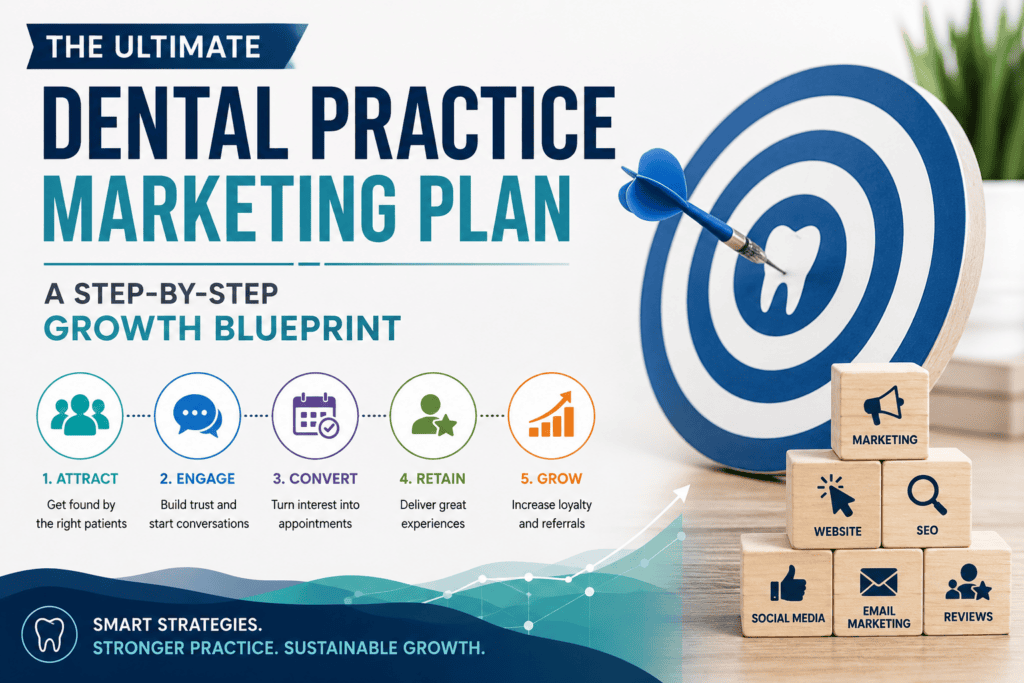
Category Selection & Local Positioning
- Category Accuracy: Set your primary category to
DentistorDental Clinic. Add secondary categories (e.g.,Cosmetic Dentist,Orthodontist,Pediatric Dentist) only if you actively offer those services. - Service-Area Focus: Ranking within your immediate 5–10 km catchment zone drives actual footfall. Broad traffic from outside your realistic service radius rarely converts into booked chair time.
The 5-Star Review Engine
Build an ethical, automated workflow to gather authentic Google reviews:
Treatment Completed → Post-Op Follow-up → Review Request via WhatsApp/SMS → Direct Review Link
- Practitioner Insight: Timing matters. Request feedback after successful procedure completion and post-op recovery, not while the patient is still numb in the operatory. Provide a direct, one-click link to your review page.
- Strict Don’ts: Never purchase fake reviews, incentivize 5-star ratings, or have staff post artificial testimonials. Focus solely on genuine patient experiences.
Local Citations & Neighborhood Landing Pages
- Directory Citations: Maintain strictly consistent NAP (Name, Address, Phone) across reputable medical portals and local directories.
- Location Landing Pages: If targeting multiple nearby localities (e.g.,
Dentist in [Area]), ensure each page contains unique neighborhood details, doctor availability, directions, and authentic clinic photos—avoid duplicate, doorway pages.
Step 4: Run Targeted Patient Acquisition Campaigns (Paid Channels)
Paid Advertising: Google & Meta Ads
Paid ads fast-track patient acquisition for new clinics and high-value procedures. Always test with fixed budgets and precise conversion tracking.
- Google Search Ads: Target high-intent queries (
Emergency dentist near me,Dental implants in [City],Clear aligners cost in [City]). Segment ad groups by treatment and optimize for cost-per-appointment and case acceptance—not vanity clicks. - Negative Keywords: Eliminate wasted spend by filtering out terms like jobs, courses, dental schools, free, cheap, salary, and DIY.
- Meta Ads (Facebook & Instagram): Ideal for visual treatments (aligners, smile design). Use educational Reels, procedure walkthroughs, clinic tours, and consent-backed patient stories rather than aggressive promotional banners.
Step 5: Master Patient Retention & Automated Recall Systems
Patient Retention & Recall Workflows
Acquisition brings patients through the door, but long-term clinic profitability depends on recall systems, incomplete treatment reactivation, and word-of-mouth referrals.
Automated 6-Month Recall System
Segment reminders by clinical need rather than sending generic blasts:
Treatment / Check-up → Post-Op Follow-up → 6-Month Recall → Booking → Next Cycle
- WhatsApp Automation: Best for conversational scheduling and interactive booking confirmations.
- SMS Reminders: Best for transactional time/date alerts.
- Protocol: Secure patient consent, avoid message spam, protect clinical privacy, and provide direct one-tap booking links.
Reactivating Incomplete Treatment Plans
Patients often pause multi-stage treatments (e.g., core build-ups awaiting crowns or phased perio therapy). Front-desk outreach should focus on continuity of care rather than sales pressure:
“Hello [Patient Name], this is [Clinic Name]. We noticed your recommended dental treatment plan is currently on hold. Whenever you’re ready to continue, we’re here to help schedule a convenient time: [Booking Link].”
Organic Referral & Family Care Strategy
Encourage word-of-mouth without using unethical or commercialized kickbacks:
- Deliver predictable, gentle chairside experiences and transparent post-op communication.
- Introduce bundled family check-up plans to expand your patient base across households.
Practitioner Insight:
Relying entirely on new patient acquisition is expensive and unsustainable. Dentistry is inherently relationship-driven; a structured recall process maximizes chair-time utilization and patient lifetime value (LTV) at a fraction of the cost of new ad spend.
Step 6: Tracking Key Dental Marketing Metrics (KPIs)
A dental practice marketing plan becomes much more powerful when decisions are based on measurable data.
Essential Metrics Every Clinic Owner Must Monitor
At minimum, monitor:
| KPI | Formula / Measurement |
|---|---|
| Leads | Total qualified inquiries |
| Appointment Conversion Rate | Appointments ÷ Leads × 100 |
| Patient Acquisition Cost | Marketing Spend ÷ New Patients |
| Lifetime Value | Average Revenue per Patient × Expected Patient Lifespan |
| Treatment Acceptance Rate | Accepted Treatment Value ÷ Presented Treatment Value × 100 |
| No-Show Rate | Missed Appointments ÷ Scheduled Appointments × 100 |
| Recall Rate | Patients Returning for Recall ÷ Patients Due for Recall × 100 |
| Chair Utilization | Productive Chair Hours ÷ Available Chair Hours × 100 |
Patient Acquisition Cost (PAC) vs. Lifetime Value (LTV)
Patient Acquisition Cost (PAC) measures how much your practice spends to acquire a new patient.
PAC = Total Marketing & Acquisition Cost ÷ New Patients Acquired
Lifetime Value (LTV) estimates the revenue a patient may generate throughout their relationship with your practice.
A healthy growth strategy should aim to create a sustainable relationship between acquisition cost and patient value.
For example, spending ₹1,000 to acquire a patient who generates ₹10,000+ in appropriate treatment and future care can be very different from spending ₹1,000 to acquire a patient who never returns.
Treatment Plan Acceptance Rate
Treatment Plan Acceptance Rate measures how frequently patients accept recommended treatment.
TAR = Accepted Treatment Plans ÷ Treatment Plans Presented × 100
Track this metric by:
- Dentist
- Treatment type
- New vs. existing patients
- Month
- Treatment value
If acceptance is low, investigate whether the issue is communication, affordability, scheduling, patient trust, or the treatment itself.
Chair Utilization & Average Production Per Hour
Chair utilization helps identify whether your available clinical capacity is being used efficiently.
Chair Utilization = Productive Clinical Hours ÷ Available Clinical Hours × 100
You can also track:
Average Production Per Hour = Total Clinical Production ÷ Productive Clinical Hours
These metrics help identify scheduling gaps, underutilized hours, and opportunities to improve practice efficiency. Read How to Grow a Dental Clinic in India: A Complete Step-by-Step Guide (2026).
Downloadable 12-Month Dental Marketing Calendar (Action Checklist)
A dental practice marketing plan should operate throughout the year rather than relying on occasional promotional campaigns.
| Month | Campaign Theme | Suggested Marketing Activities |
|---|---|---|
| January | New Year Smile & Oral Health | Smile consultations, check-up education, social media campaign |
| February | Children’s & Family Dental Care | Family dentistry content, preventive-care education |
| March | Oral Health Awareness | Educational campaign, screening awareness, social content |
| April | Summer Dental Care | Check-up campaign, children’s dental education |
| May | Wedding & Smile Season | Cosmetic dentistry and aligner education |
| June | Mid-Year Dental Check-up | Recall/reactivation campaign |
| July | Monsoon Oral Health | Oral hygiene education and preventive content |
| August | Independence/Community Campaign | Community outreach and educational campaign |
| September | Back-to-School Dental Checks | Pediatric check-up and preventive-care campaign |
| October | Festival Smile Campaign | Cosmetic dentistry and smile education |
| November | Family Dental Health | Family check-ups and recall campaign |
| December | Year-End Dental Check-up | Pending-treatment reactivation and next-year recall planning |
Campaign dates should be adapted to your local market, patient demographics, clinical capacity, and relevant health-awareness events.
Final Takeaway: Turn Dental Clinic Marketing & Strategy Into a System
The most effective dental clinic marketing plan is not a single advertisement or social media campaign. It is a complete growth system.
The process can be summarized as:
Positioning → Website → Local SEO → Paid Acquisition → Conversion → Treatment Acceptance → Retention → Recall → Referrals → Measurement
Start with the fundamentals. Build a strong digital foundation, dominate local search, invest in measurable patient acquisition, improve patient retention, and continuously track your KPIs.
Most importantly, remember that marketing should create opportunities for appropriate patient care—not pressure patients into unnecessary treatment.
A well-designed dental practice marketing system can help a clinic build stronger visibility, a more predictable patient pipeline, better patient relationships, and sustainable long-term growth.
Frequently Asked Questions
Clear answers on budgeting, ethics, patient acquisition, and digital strategy for modern dental clinics.
Dental Clinic Marketing Strategy vs. Marketing Plan: What’s the Difference?
While often used interchangeably, they serve two distinct stages of practice growth:
- Dental Clinic Marketing Strategy: The high-level foundation—defining your unique value proposition, target patient demographics, procedure pricing, and high-margin service focus (such as dental implants, clear aligners, and full-mouth rehabilitation).
- Dental Clinic Marketing Plan: The tactical, month-by-month execution roadmap—running Google Business Profile reviews, local SEO campaigns, WhatsApp patient recall workflows, and educational video marketing.
A strategy defines where to compete and what to offer, while a marketing plan specifies the exact actions and timeline to acquire patients.
Is marketing really necessary for a dental clinic, or is word-of-mouth enough?
Word-of-mouth and clinical excellence are the foundation of any reputable practice, but they are often too slow and unpredictable to sustain a modern clinic in competitive areas. Today’s patients verify everything online—even when recommended by family or friends, they will still search your clinic on Google to check reviews, timings, and cleanliness before booking.
Modern dental marketing isn’t about aggressive sales or price discounts; it is about making your clinical skills visible and accessible. When done ethically, structured marketing ensures that patients who genuinely need your expertise can find your practice, understand their treatment options, and make informed oral health decisions.
How much should an independent dental clinic in India spend on marketing per month?
For most private dental practices in India, a practical benchmark is ₹15,000 to ₹35,000 per month for an initial growth or local launch phase, or approximately 5% to 8% of monthly clinic revenue for established clinics.
Rather than dispersing a small budget across multiple channels, invest in high-converting essentials: local Google Maps optimization (GBP), high-intent search ads for priority treatments (like implants, root canals, or aligners), and automated WhatsApp follow-ups.
Can dentists legally advertise and market their clinics in India?
Yes, but promotional activities must comply with ethical guidelines set by the Dental Council of India (DCI) and state dental councils. Dentists are permitted to share factual, educational, and service-related information (such as clinic location, timings, qualified degrees, and treatment procedures).
Ethical marketing means avoiding misleading price discounts, commercial touting, or deceptive “guaranteed painless” cure claims. The focus should be on building clinical credibility through patient education, transparent care, and organic reviews.
Why do dental clinics in India lose potential patients even after getting leads?
In India, most clinic inquiries are lost due to slow response times and poor front-desk follow-up, rather than the ads themselves.
Indian patients typically inquire across multiple clinics simultaneously and expect fast confirmation via WhatsApp or phone call. If an inquiry isn’t acknowledged within 5 to 15 minutes by a trained clinic receptionist, the patient will almost always book with a competing clinic nearby.
Which is better for a dental clinic: Google Business Profile (Maps) or third-party listing platforms?
Google Business Profile (GBP) is the most valuable long-term asset for an independent dental practice. While aggregator platforms (like Practo or Justdial) can supply initial patient volume, you do not own the audience and often face ongoing commission fees or competitor placements next to your profile.
A well-optimized Google Business Profile that consistently earns authentic patient reviews drives direct, commission-free appointment calls from patients searching locally in your immediate neighborhood.
How long does it take to see results from a dental marketing plan?
Results depend on the channel.
Paid advertising can generate inquiries relatively quickly, while SEO and organic local visibility generally require more time to build.
A practical approach is to evaluate marketing performance monthly and assess meaningful trends over several months rather than judging a strategy from a few days of data.
What is the most cost-effective marketing channel for a new dental practice?
There is no universal winner.
For many local dental practices, a combination of Google Business Profile optimization, local SEO, a conversion-focused website, patient reviews, referrals, and targeted paid search can create a strong foundation.
The best channel is ultimately the one that consistently produces qualified patients at a sustainable acquisition cost.

Dentist | Private Practitioner | Dental Clinic Owner | Dental Practice Consultant
Dr. Anuran Ghosh Mondal is a BDS-qualified dentist, private practitioner and dental clinic owner with 12+ years of clinical experience in India. He is the founder of DentalClinicAlly.com and DentistUpgrade.com and has practical experience in Dental Clinic Business Consulting- dental practice management, patient acquisition, market analysis, branding, marketing and clinic growth.